
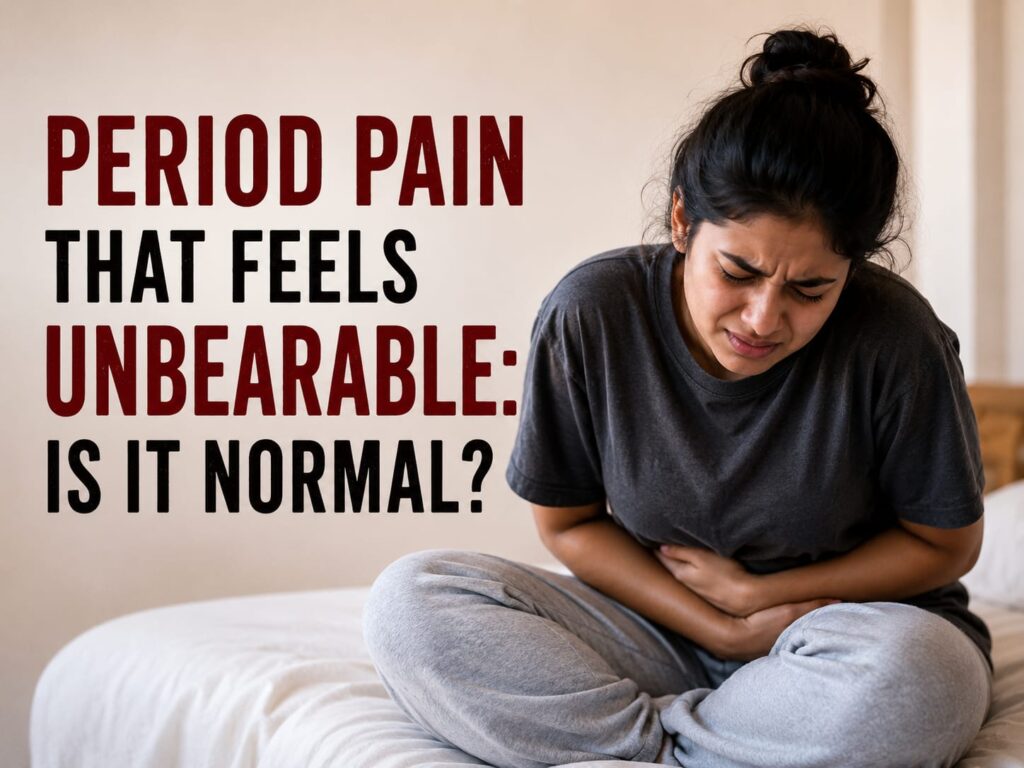
Period pain is often treated like just something women should “deal with” but pain that makes you miss school, work, sleep, or daily activities .Many women are told period pain is “normal,” but intense pain that stops you from functioning and deserves attention. Mild cramps during periods can be normal, especially in the first 1–2 days. But if the pain feels unbearable, keeps getting worse, or doesn’t improve with pain relief, it may be linked to an underlying health condition. Painful periods are often normalized, but severe cramps that spoil your day are not something you should simply tolerate.
Some common reasons include:
Endometriosis
Endometriosis happens when tissue similar to the lining of the uterus (endometrium) grows outside the uterus commonly on the ovaries, fallopian tubes, bladder, bowel, or pelvic lining. During each menstrual cycle, this tissue responds to hormones just like the uterine lining does, it thickens breaks down, and bleeds. But because the blood has no easy way to leave the body, it can cause inflammation, irritation, scar tissue, and adhesions.
Common symptoms include:
- Severe menstrual cramps
- Heavy bleeding
Adenomyosis
Adenomyosis happens when the tissue that normally lines the inside of the uterus, it begins growing into the muscular wall of the uterus. As this tissue continues reacting to monthly hormonal changes, it can cause inflammation, swelling, and pressure within the uterine muscle, making the uterus enlarged and often very painful during periods. As the tissue continues responding to monthly hormonal changes, it triggers inflammation and increased pressure inside the uterine muscle,
common symptoms includes
- Very painful during period
- Heavy bleeding
- Lower back pain
It is more common in women in their 30s and 40s, but younger women can also experience it. High estrogen levels and repeated uterine inflammation may responsible to the condition.
Fibroids
Fibroids are non-cancerous growths made of muscle and fibrous tissue that develop in or around the uterus. Fibroids are strongly influenced by estrogen and progesterone, which is why they often grow during reproductive years.
common symptoms include
- Heavy menstrual bleeding
- Long periods
- Severe cramps
- Lower back pain
Some fibroids cause no symptoms at all but others significantly affect quality of life.
Ovarian Cysts
Ovarian cysts are fluid-filled sacs that form on or inside the ovaries. Many are harmless and disappear naturally, especially “functional cysts” linked to ovulation. larger or ruptured cysts can cause severe pain.
Symptoms may include:
- Sharp or one-sided pelvic pain
- Pain during periods or ovulation
- Irregular menstrual cycles
Polycystic Ovary Syndrome
PCOS is a complex hormonal and metabolic condition caused by a combination of genetic, hormonal, and lifestyle-related factors. Women with PCOS often have higher levels of androgens and insulin resistance. This leading to irregular periods and sometimes painful cycles.
Symptoms commonly include:
- Irregular or missed periods
- Excess facial or body hair
- Acne
- Weight gain or difficulty losing weight
- Hair thinning or hair loss
Primary Dysmenorrhea
Primary dysmenorrhea refers to menstrual cramps that are not caused by another disease or condition. It is the most common type of period pain, especially in teenagers and women in their early 20s. The pain is mainly caused by high levels of prostaglandins.
It is a active liquid chemical that help to regulate the pain ,inflammation and many body process.
common symptoms include
- Cramping lower abdominal pain
- Headaches
- Fatigue
- lower back or thighs
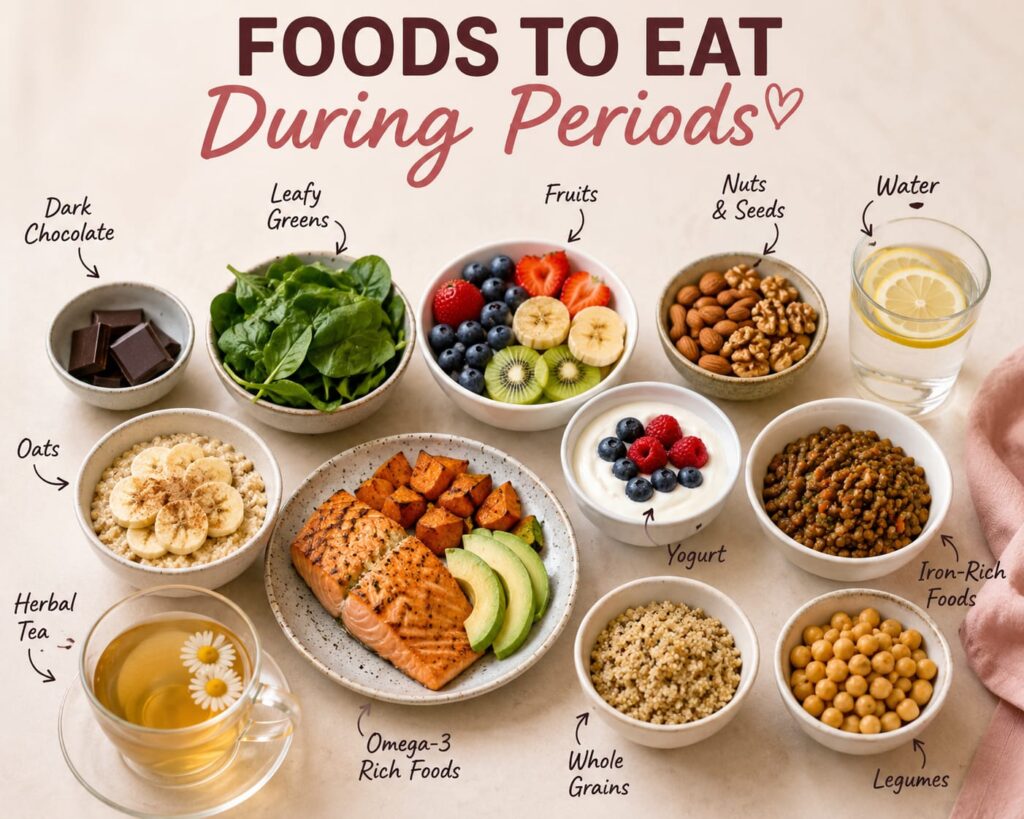
Food to eat during the periods
During periods, eating balanced and nourishing foods can help support energy levels and reduce discomfort like cramps.
Iron-rich foods
Periods can lead to iron loss through bleeding, so iron rich foods may help maintain energy levels. Spinach, Beetroot, Lentils and beans, Eggs, Lean meat and fish.
Magnesium-rich foods
Magnesium may help relax muscles and reduce cramps. Some food include Nuts and seed Dark chocolate, Bananas, Avocados
Omega-3 rich foods
Omega-3 fatty acids have anti inflammatory properties that may help with period pain, some food includes Salmon, Walnuts, Flaxseeds Chia seeds.
Hydrating foods
Staying hydrated may help reduce bloating and headaches. Water, Coconut water, Cucumbers, Watermelon, Oranges.
Warm and comforting foods and Calcium and Vitamin D foods
Warm foods can feel soothing and may help relax the body Soups Herbal teas, Warm rice or porridge Cooked vegetables. some calcium and vitamin d food includes, Eggs, Milk or yogurt, Paneer, Fortified foods.
Foods to Limit During Periods
Some foods may worsen bloating or discomfort in some people
- Very salty foods
- Excess caffeine
- Sugary snacks
- Highly processed foods
- Oily or fried foods
Take care of body is important some women feel better with lighter meals, while others need more energy-dense foods during their period. Gentle exercises can help many people with period cramps, but intense exercise is not necessary if your body needs rest.
Final thought
Period pain is common, but severe pain that affects your daily life should never be ignored. While lifestyle habits like rest, nutrition, hydration, and gentle movement may help manage cramps, ongoing or intense pain can sometimes be linked to underlying conditions such as endometriosis, adenomyosis, fibroids, or PCOS listen to your body, tracking symptoms and consult gynecologist when needed are important steps toward understanding and caring for your reproductive health.