
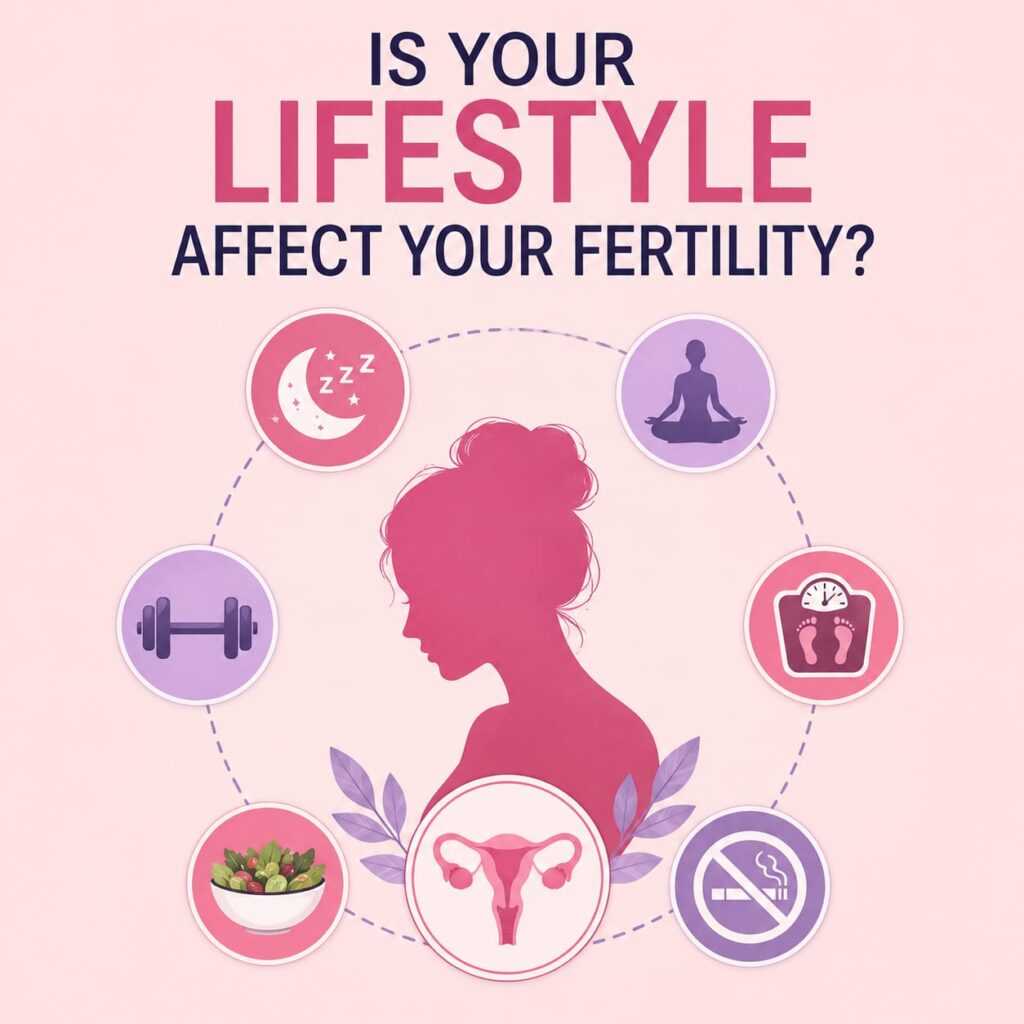
Have you ever stopped for a moment and wondered if your everyday lifestyle could be affecting your fertility? Most people don’t really think about it until they start planning for a baby. We usually assume fertility will naturally fall into place when the time comes, but our body often responds to the habits we follow for years, not just a single moment in life.
Most of us don’t realize it, but our bodies quietly respond to how we live every single day. The way you sleep, the way you eat, how much stress you carry, how often you move, and even how you take care of your emotions everything sends signals to your body. Slowly and silently, your body responds to these patterns. Fertility, in many ways, depends on whether your body feels safe, balanced, and supported enough to take on something as important as pregnancy.
From the body’s perspective, pregnancy is a major responsibility. So when the body feels constantly tired, stressed, or unhealthy, it focuses more on protecting and balancing itself first. That’s one reason why stress, poor sleep, or unhealthy routines sometimes affect menstrual cycles and hormones.
Sleep plays a much bigger role here than we often realize. When you sleep well, your body uses that time to reset hormones, repair itself, and maintain balance in your reproductive system. But when sleep becomes irregular or insufficient, these processes get disturbed. Over time, this can affect how your hormones communicate with each other, which may lead to irregular cycles or reduced reproductive efficiency. It’s not always immediate, but the impact builds slowly.
Stress is another factor that quietly influences fertility. It doesn’t always have to be obvious or extreme. Even daily overthinking, emotional pressure, or mental exhaustion can signal your body to release stress hormones like cortisol. When cortisol levels stay high for a long time, your body begins to prioritize stress management over reproductive functions. This can interfere with ovulation and hormonal balance, even if everything else in your routine seems fine on the surface.
Food matters too, and not in a strict dieting way. Fertility is connected to nourishment. The body needs healthy fats, proteins, vitamins, iron, and other nutrients to function properly. If most meals are processed, skipped, or lacking nutrition, the body may not get the support it needs. Small improvements in eating habits can sometimes help more than extreme diets.
Weight and energy balance are also closely connected to fertility. Sudden weight gain or loss can confuse your body’s hormonal signals. Too much or too little body fat can disrupt the delicate balance needed for ovulation and regular cycles. What your body truly needs is stability not extremes, not pressure, just consistent care.
Even your environment plays a role in ways you might not immediately notice. Daily exposure to pollution, chemicals, plastics, and certain products can slowly interfere with your hormonal system. These effects are not always visible right away, but over time, they can influence your overall reproductive health.
The most important thing to understand is that lifestyle does not affect fertility overnight. It’s not about one unhealthy meal, one stressful day, or one sleepless night. It’s about patterns how you’ve been living, day after day. Your body keeps track of these patterns and responds accordingly.
This is not something to be afraid of. It’s something to be aware of. Your body is not working against you it is simply responding to the environment you are creating for it. And the beautiful part is that it can also respond positively when you begin to take care of it. Small changes, like improving your sleep, managing stress a little better, eating more nourishing food, and moving your body regularly, can slowly bring your system back into balance.
So instead of worrying about fertility as something distant or uncertain, it helps to look at your daily life with a little more awareness. Because in the end, fertility is not just about the future it is deeply connected to how you are living in the present ❤️.