
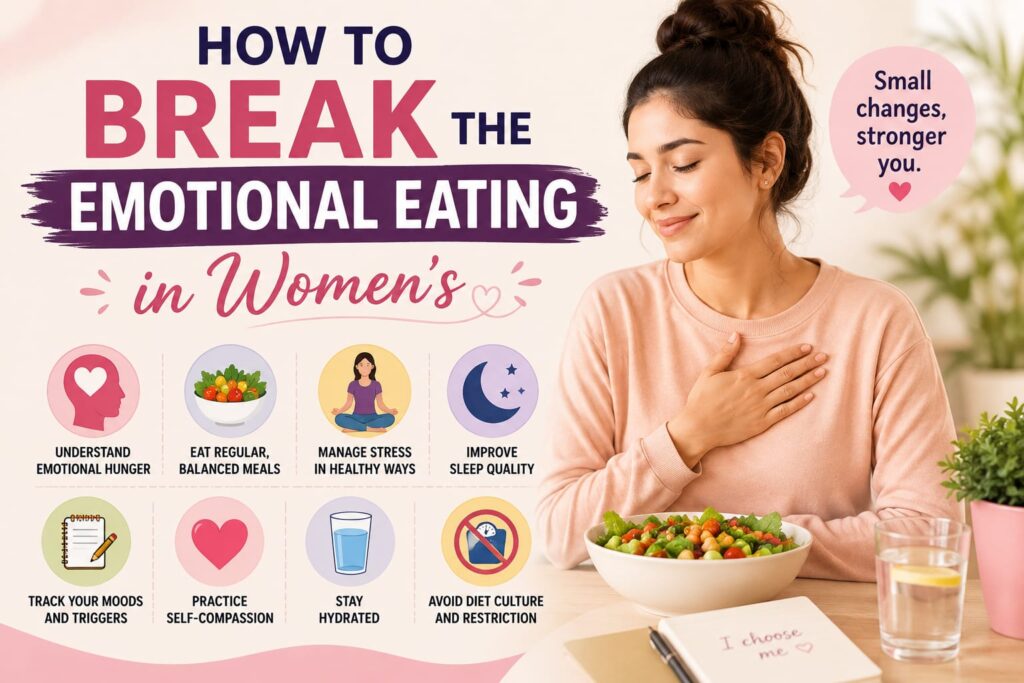
Emotional eating happens when food is used for comfort instead of true physical hunger. Many women experience emotional eating during times of stress, sadness, loneliness, anxiety, tiredness, hormonal changes, or emotional pressure. During these moments, the mind often looks for temporary relief, and cravings for sugary, salty, or high-calorie foods become stronger. Foods like chocolate, chips, ice cream, fried foods, or fast food may briefly create feelings of comfort and satisfaction because they can increase brain chemicals such as dopamine and serotonin, which are connected to pleasure, calmness, and emotional relief.
Why emotional eating happen?
The brain and body are deeply connected, which is why emotions can strongly affect eating habits. When the body experiences stress whether emotional, mental, or physical it releases a hormone called cortisol. Cortisol is produced by the adrenal glands located above the kidneys. In normal amounts, cortisol helps the body maintain energy levels and control blood sugar. However, when stress continues for a long time, cortisol levels may stay high, increasing cravings for sugary, salty, and high-fat foods because the brain starts searching for quick comfort and energy. High cortisol can also affect hunger hormones like ghrelin and leptin, making appetite and cravings harder to control.
Lack of sleep also plays an important role in emotional eating. Sleep is very important for both physical and emotional health. When the body does not get enough good-quality sleep, it affects mood, energy levels, concentration, and blood sugar balance. Poor sleep can disturb hunger hormones and make the body crave quick energy sources, especially sugary or high-calorie foods. When energy levels become low, the brain often searches for rapid fuel, which increases emotional cravings. Over time, irregular sleep can make emotional eating habits stronger because the body and mind become more tired and stressed.
Hormonal fluctuations are another major reason emotional eating is common in women. Changes in estrogen and progesterone levels during the menstrual cycle can affect mood, cravings, appetite, and emotions. Before periods, many women notice stronger cravings for sweets, salty snacks, chocolate, or high-carbohydrate foods because the brain is reacting to hormonal shifts. These foods may temporarily increase serotonin levels, sometimes called the “feelinf good” hormone, which may briefly improve mood and reduce emotional discomfort. Hormonal changes can also increase feelings of sadness, irritability, anxiety, loneliness, frustration, or emotional emptiness, which may lead to comfort eating
Diet culture and strict dieting can also effects. When women repeatedly restrict foods or skip meals eating some snacks instead of meal or dinner the body and mind may start craving those foods more intensely. This can lead to cycles of restriction followed by emotional overeating, especially during stressful times. Many diets promote strict rules such as avoiding carbohydrates, skipping meals, eating very little, or labeling foods as which is good for health and which is bad. When the body is restricted for too long, it naturally starts craving energy rich foods. By stronger the restriction, the cravings also stronger. When someone tries very hard to control eating, even a small “cheat” meal may create guilt or shame. This emotional stress can lead to overeating because the person may feel they have already failed in diet.
Social pressure and body image concerns can deeply affect emotional health. When women frequently compare their appearance with influencers, celebrities, friends, or online trends, it can reduce self confidence. They may begin focusing only such as weight, skin, hair, body shape, or facial features. This constant self criticism can create emotional stress and anxiety. After increasing stress the craving for the food is also increased. Negative comments from family, friends, classmates, or society can also have a strong emotional impact. Remarks about weight gain, body size, eating habits, or appearance may stay in the mind for a long time. These emotional experiences can increase stress hormones in the body and affect mental well being.
How to break the emotional cycle?
Emotional hunger is not a true hunger it search for the comfortness and relief from physical and mental emotions . It may create strong cravings for comfort foods such as sweets, chocolate, fried foods, or fast food. Unlike physical hunger, emotional hunger may continue even after feeling full because the body is searching for emotional relief instead of energy. Recognizing the situations, emotions, or thoughts and try to overcome from that
That can help create better habits. Keeping track of moods.

Skipping meals or following very strict diets can increase cravings and make emotional eating. Eating regular and balanced meals helps stabilize blood sugar, energy levels, and mood, reducing the urge to comfort eat. Identified foods as “good” or “bad” can create guilt and emotional stress around eating. Focuses on heathy and balanced instead of restriction. Allowing occasional favorite foods without guilt can help reduce stress. Practice a mindful eating means paying attention while eating instead of eating automatically during emotional moments. Eating slowly, noticing hungerness and fullness signals, and understanding emotions before eating can help reduce emotional overeating.
Sleep for 8 hour is very important for the balanced hormones. Poor sleep can disturb hunger hormones and increase cravings for sugary or high calorie foods. Getting enough sleep supports emotional balance and better decision making around food and make your mind calm and peaceful. Try to make undisturbed sleep it will help to reduce stress.
Tips for increased the sleep quality
1 Going to bed and waking up at the same time every day.
2 Reduce screen timing atleast 30 minute before going to bed.
Emotional eating in women is connected to stress, hormonal changes, social pressure, poor sleep, and emotional struggles. Understanding emotional triggers, improving sleep quality, managing stress in healthier ways, and building a balanced relationship with food can help reduce emotional eating habits. Small lifestyle changes can helps. Rather than focusing on strict diets or skipping meals or dinner developing healthy daily habits and listen to your body caring for emotional health can help women build a more positive relationship with both food and their bodies over time.