
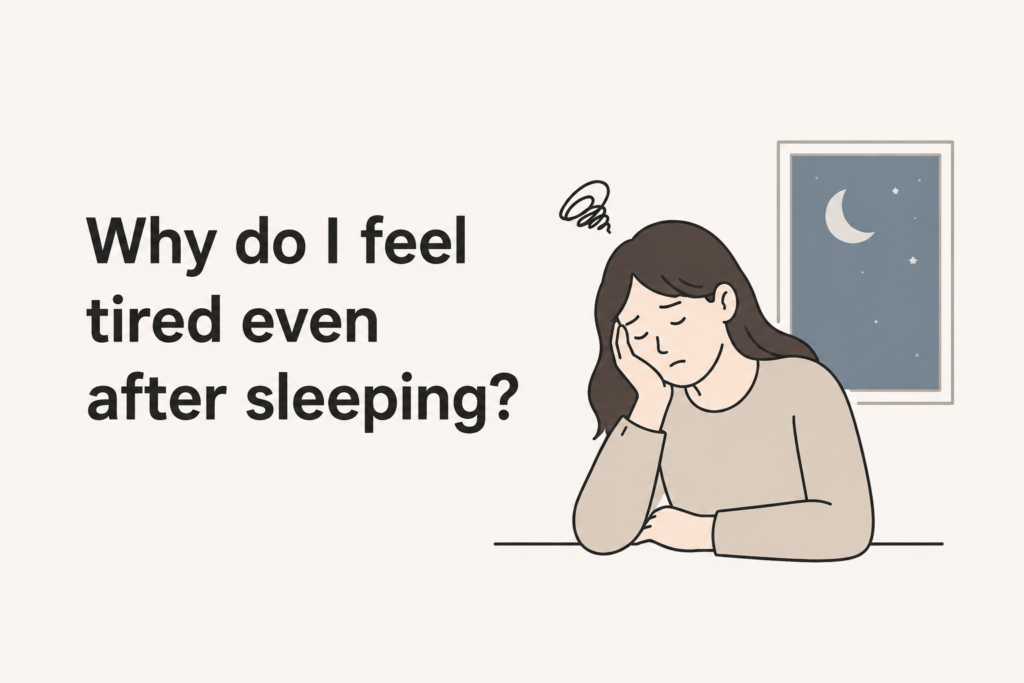
Feeling tired even after getting enough sleep is something many people struggle with today. You go to bed hoping to wake up refreshed, but instead you still feel sleepy, drained, and mentally exhausted. This constant tiredness can affect your mood, focus, work, and daily life. The good news is that there are several common reasons behind it, and most of them can be improved with the right habits and care.
“What’s the point of sleeping if I still feel exhausted?”
The truth is, feeling tired even after sleeping is more common than most people realize, especially in your 20s. And often, it’s not about how many hours you sleep it’s about how well your body actually rests.
1. It’s Not About Quantity, It’s About Quality
The most common reason for tiredness is poo sleep quality. Have you ever woken up after what seemed like a full night’s sleep, only to feel just as exhausted as when you went to bed? It can be frustrating and confusing. You expect sleep to leave you feeling refreshed, yet your body feels heavy, your mind feels foggy, and even simple tasks seem difficult. Many people experience this, and it does not always mean that you are not sleeping enough. Sometimes, the quality of your sleep and your overall health matter more than the number of hours spent in bed. You might be in bed for 8 hours, but that doesn’t mean your sleep was deep or restorative. During the sleep our body goes through different sleep stages, especially deep sleep and REM sleep. These are the phases where your body repairs itself and your brain resets. If your sleep keeps getting interrupted even slightly you may miss out on these important stages. Things like noise, stress, or even checking your phone at night can disturb your sleep without you realizing it.
2. Your Phone Might Be Stealing Your Energy
Scrolling through your phone before bed may feel relaxing, but it can actually make your sleep worse. The blue light from screens reduces melatonin production, which is the hormone that helps your body know when it’s time to sleep. Even if you fall asleep quickly, your body may struggle to enter deep sleep properly. This is why many people wake up feeling like they barely rested at all.
Try avoiding screens for at least 30–60 minutes before bedtime. Reading a book, listening to calm music, or simply resting your mind can help improve sleep quality naturally. spend When we just a few more minutes” scrolling through our phone Before you know it, an hour has passed. You finally put your phone down, close your eyes, and hope for a good night’s sleep. Yet the next morning, you wake up feeling exhausted, unmotivated, and wondering why you are still tired. The truth is that your phone may be quietly stealing your energy without you even realizing it.
Our phones laptop screens keep us connected, informed, and entertained, but they can also make it harder for our brains to switch into rest mode. Social media feeds, videos, messages, and endless notifications keep our minds active when they should be slowing down. Even after you put the phone away, your brain may still be processing everything you just saw, making it more difficult to fall into deep, restorative sleep. The blue light emitted from screens can also interfere with your body’s natural sleep cycle. This light can reduce the production of melatonin, the hormone that helps your body recognize when it is time to sleep. As a result, your brain may think it is still daytime, delaying sleep and reducing the quality of rest you get throughout the night. But the impact goes beyond blue light. Many people carry emotional stress from what they see online. Comparing yourself to others, reading upsetting news, or feeling pressured to stay connected can leave you mentally exhausted. You may be lying in bed physically still, yet your mind is racing. This emotional overload can make sleep feel less refreshing, even if you spend enough hours in bed.

3.Your Mind Is Still Awake
Sometimes the problem is not that your body isn’t sleeping, it’s that your mind never truly rests. You may lie down in bed, close your eyes, and spend seven or eight hours asleep, yet wake up feeling completely drained. This happens because while your body is resting, your mind may still be busy carrying worries, stress, fears, responsibilities, and unanswered questions. It’s like trying to charge your phone while dozens of apps are still running in the background. The battery charges, but not as efficiently as it should.
Many people experience this without even realizing it. During the day, you may be focused on work, studies, family responsibilities, finances, relationships, or future plans. At night, when everything becomes quiet, those thoughts often become louder. Your brain starts replaying conversations, worrying about tomorrow, analyzing mistakes, or imagining worst-case scenarios. Even if you eventually fall asleep, your brain may remain in a heightened state of alertness. This is why you might wake up feeling as though you never truly rested.
Stress and overthinking don’t just affect your emotions they affect your sleep quality. When your mind feels overwhelmed, your body produces stress hormones that can interfere with deep sleep. As a result, your sleep becomes lighter, less restorative, and more fragmented. You may wake up several times during the night without remembering it. Imagine carrying a heavy backpack all day. Even when you sit down, the weight is still there. Mental stress works in a similar way. Your body may be resting in bed, but your mind continues carrying that invisible load.
The good news is that your mind needs care just as much as your body does. Taking even a few minutes each day to relax can make a meaningful difference. Listening to calming music, writing your thoughts in a journal, practicing mindfulness, reading a book, spending time in nature, or talking with someone you trust can help release some of that emotional pressure. Most importantly, be patient with yourself. You don’t have to solve every problem before going to sleep. Tomorrow will still be there when you wake up. Sometimes the greatest gift you can give yourself is permission to rest.
A peaceful mind often leads to a more restful night, and a more restful night can help you wake up feeling lighter, stronger, and ready to face a new day with renewed energy.
.
4. What You Eat Matters More Than You Think
Food is your body’s source of energy. If you skip meals or eat too much junk food, your body may not get the nutrients it needs to function properly. Low iron, Vitamin D deficiency, and low Vitamin B12 are common causes of weakness and fatigue. When your body lacks nutrients, you may feel sleepy, dizzy, or low on energy throughout the day. Food is much more than something that fills your stomach. It is the fuel that powers every cell, organ, and function in your body. When you consistently eat nutritious foods, your body has the energy it needs to think clearly, stay active, and feel healthy. But when meals are skipped or replaced with unhealthy foods, your body can struggle to keep up, often leaving you feeling tired, weak, and drained. Think of your body like a car. Even the best car cannot run properly if it is given poor quality fuel. In the same way, your body cannot perform at its best when it lacks the nutrients it needs. Sometimes people assume that feeling exhausted is simply because they did not sleep enough, but nutrition plays a huge role too.
5. Lack of Physical Activity
A lifestyle with very little movement can make the body feel weak and lazy. Sitting for long hours at work, studying all day, or spending too much time indoors can reduce blood circulation and lower energy levels. Many people think resting more will make them feel energetic, but too much inactivity often causes more tiredness. Exercise helps improve blood flow, strengthens the body, and increases overall energy. Start with simple physical activities like walking, stretching, cycling, or light exercise for at least 20–30 minutes daily. Regular movement can greatly improve both sleep and energy levels. Your body relies on vitamins and minerals to produce energy and keep your muscles, brain, and immune system working properly.
Vitamin B12 Deficiency: B12 helps create healthy red blood cells and supports nerve function. Without enough B12, you may experience tiredness, weakness, and difficulty concentrating.
Low Iron: Iron helps carry oxygen throughout your body. When iron levels are low, your body struggles to deliver enough oxygen to tissues, making you feel weak, tired, and sometimes dizzy.
Vitamin D Deficiency: Vitamin D supports bone health, immunity, and energy levels. Low levels can make you feel sluggish and fatigued.
Certain Foods Affect Your Energy
Many people enjoy a cup of coffee or tea to relax, but caffeine can remain in your body for several hours. Even if you fall asleep, caffeine may reduce the quality of your sleep, causing you to wake up feeling less refresh.
Sugary foods can give you a quick burst of energy, but that energy often disappears just as quickly. This sudden rise and fall in blood sugar can leave you feeling even more tired later. Eating these foods frequently may also interfere with healthy sleep patterns.
Skipping meals might seem harmless, but your body needs a steady supply of nutrients and energy throughout the day. Missing meals can cause low blood sugar levels, making you feel weak, tired, irritable, and unable to focus.
Water is often overlooked, but it is essential for energy production. Even mild dehydration can make you feel exhausted, cause headaches, and reduce concentration. Sometimes what feels like fatigue is simply your body’s way of asking for more water.
6. Sleep Disorders
Sometimes the problem is not the amount of sleep but a hidden sleep disorder. Conditions like Sleep Apnea can interrupt breathing during sleep and stop the body from resting properly. People with sleep disorders often wake up feeling tired no matter how long they sleep.
Sleep apnea is a chronic sleep disorder in which breathing repeatedly stops and starts during sleep. It can lead to poor sleep quality, daytime fatigue, and serious health risks if untreated. The condition is widespread and often underdiagnosed, affecting both adults and children worldwide.
Feeling tired all the time is not something you should ignore. Your body may be trying to tell you that it needs better sleep, healthier habits, proper nutrition, less stress, or medical attention. Real energy comes from a combination of good sleep, mental peace, physical activity, and a healthy lifestyle. Even small positive changes in your daily routine can slowly improve your energy levels and help you feel refreshed again.
What you eat has a direct impact on how you feel every day. A balanced diet rich in essential nutrients, adequate hydration, and healthy eating habits can help maintain energy levels and support overall well-being. Skipping meals, consuming excessive junk food, or lacking important nutrients such as iron, Vitamin D, and Vitamin B12 can contribute to tiredness and fatigue. By nourishing your body with healthy foods, staying hydrated, and maintaining a balanced lifestyle, you can improve your energy, health, and quality of life. Healthy choices today can lead to a more active, energetic, and healthier tomorrow.