
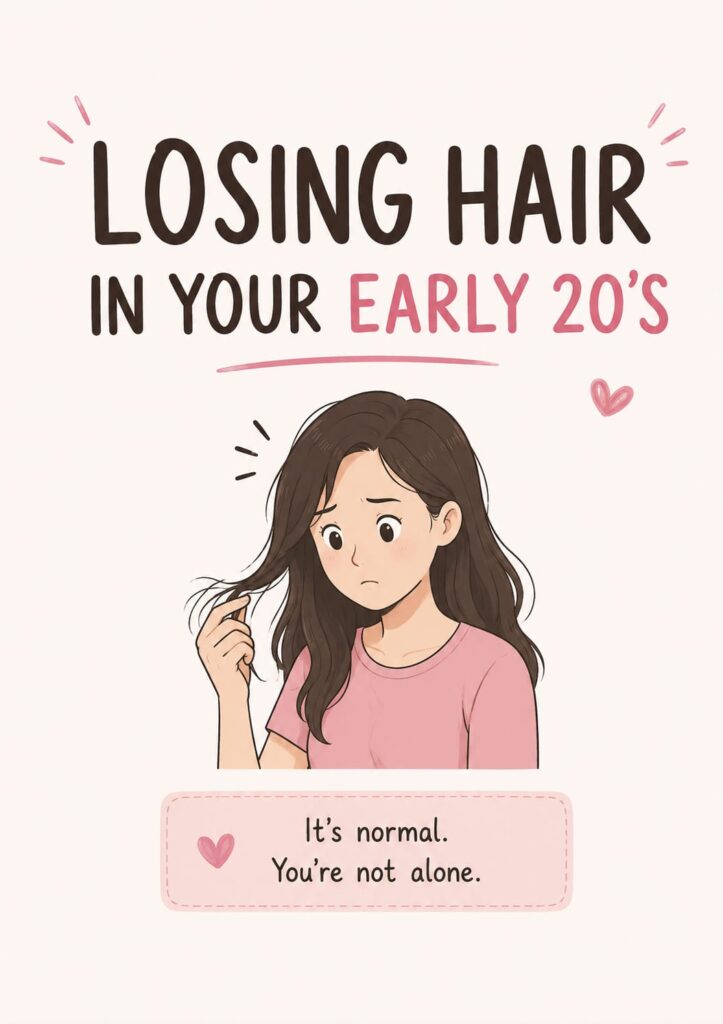
Maybe it starts indirectly more strands wrapped around your fingers while shampooing. A little extra hair on your pillow. A ponytail that suddenly feels thinner. So when it starts early, it can feel confusing, frustrating, and honestly a little scary Because in your early 20s, hair loss feels unexpected.
When you standing in front of a mirror wondering, “Why is my hair falling already?”
Your hair can reflect stress, hormones, genetics, lifestyle, and overall health more than most people realize. While losing hair can feel like losing control, understanding why it’s happening can be the first step toward getting that control back.
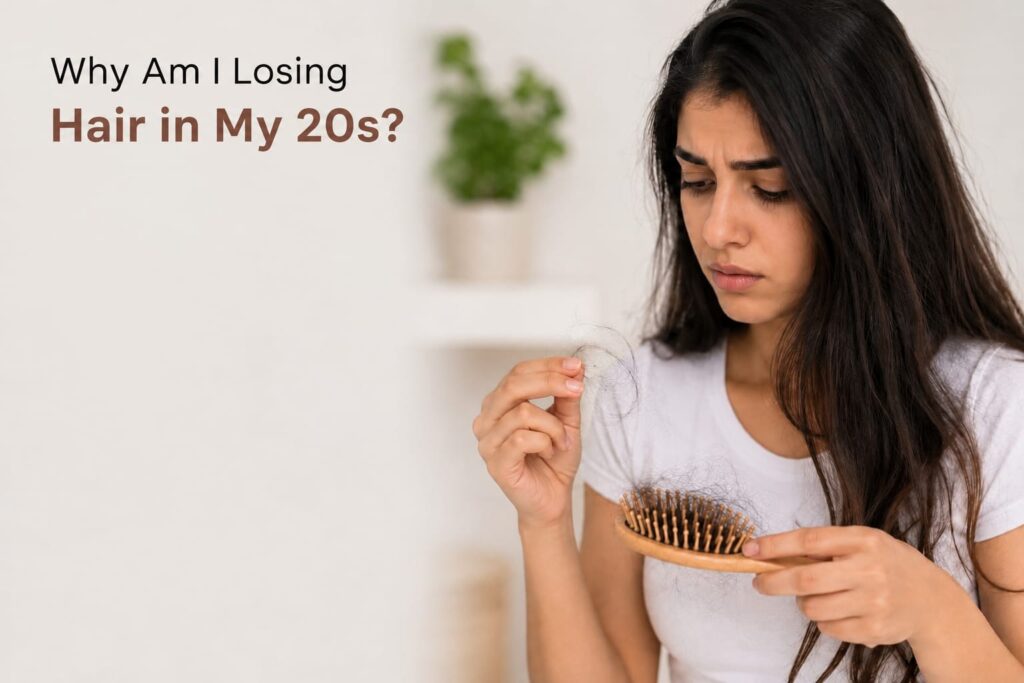
Hair fall may be genetic
A lot of people assume genetic hair loss only happens to older adults, but that’s not true. Pattern hair loss can begin surprisingly early even in the late teens or early 20s. Hair grows from tiny roots in the scalp called hair follicles. In some people, these follicles are genetically sensitive to a hormone called DHT (Dihydrotestosterone). Over time, DHT slowly shrinks the follicles, causing the hair to become thinner, weaker, and slower to grow back. As the follicles continue to shrink, some may eventually stop producing visible hair completely.
Signs of genetic hair fall
- Hair thinning runs in the family.
- Wider hair partition over time.
- visibility in the scalp is more.
- Gradual thinning instead of sudden hair loss.
- Hair becoming finer year after year.
Stress can trigger hair loss
When your body goes through high stress, it releases stress hormones like cortisol. These hormones can disturb the normal hair growth cycle. During intense physical or emotional stress, many hair follicles suddenly enter the resting phase too early.
A few weeks or months later, this hair starts falling out more than usual. This condition is called telogen effluvium.
Telogen effluvium is a temporary hair loss condition caused by stress, illness, lack of nutrition, hormonal changes, or emotional shock.
In this condition, many hair strands enter the “resting phase” too early, which leads to increased hair shedding after a few weeks or months.
Common signs:
More hair fall while washing or combing, hair on pillow or clothes, overall hair thinning instead of bald patches
Usually, hair grows back once the body recovers from the stress or problem causing it.
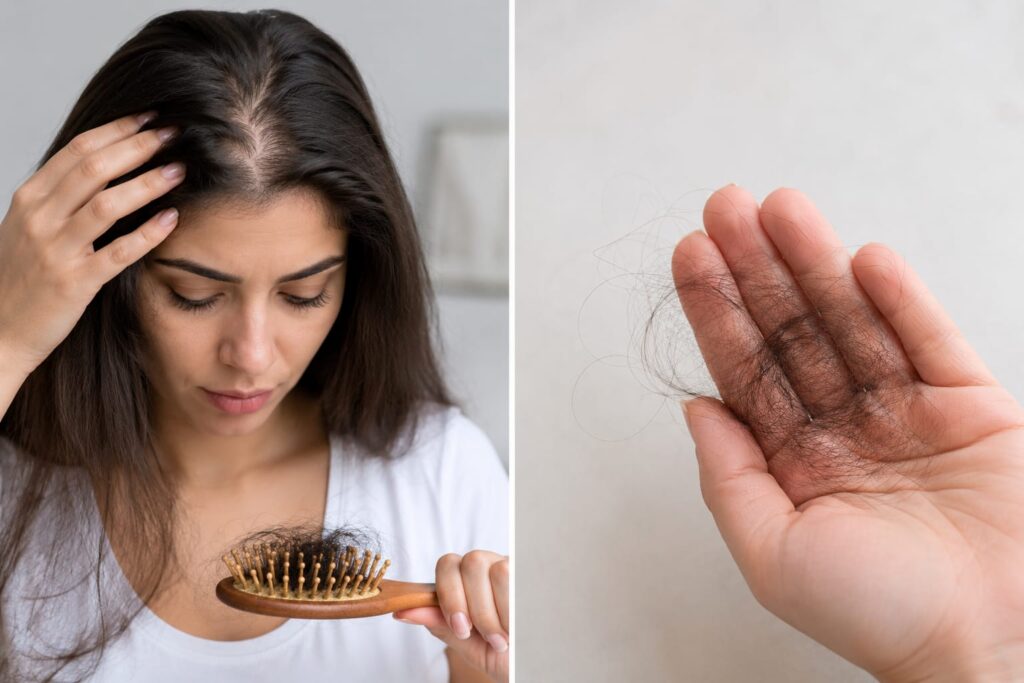
Signs
- Sudden increase in daily shedding
- Hair falling while washing or combing
- Hair loss appearing 2–3 months after stressful events.
Healthy hair with starts with good nutrition
The hair strand is mainly made up of a protein called keratin, which is why the body needs enough protein to build strong hair.
Nutrients like iron help carry oxygen to the hair roots, while vitamins such as Vitamin D, B12, Biotin, and Zinc support the hair growth cycle and scalp health.
Signs
- increased hair shedding.
- slower hair growth.
- thinner or fragile strands of hair.
- dull and weak hair texture.
Hair health depends on balanced hormones
Hormones such as Estrogen, progesterone, thyroid hormones, insulin, and androgens all affect how hair grows. Balanced hormones help hair follicles receive proper signals for healthy and continuous hair growth.
Estrogen helps keep hair in the growing phase for a longer time, which makes hair look thicker and fuller.
Progesterone helps balance the effects of androgens like DHT.
Thyroid hormones control how active the body’s cells are, including hair follicles. Too little or too much thyroid hormone can slow hair growth, increase shedding, and make hair dry or brittle.
Insulin which may weaken hair follicles and lead to thinning.
Beauty Habits Can Become Damage Habits
We often style our hair to feel more confident—heat tools, bleaching, tight ponytails, extensions, sleek buns. But repeated tension and damage can weaken strands over time. Sometimes what looks like hair “fall” is actually breakage. Hair can struggle when it’s constantly:
The reasons for damage hairs are : Pulled tight, overheated, chemically processed, washed harshly,
style your hair, but give it care too.
Treat your hair gently naturally and consistently
Maintain balanced nutritious food
Protein helps build strong hair strands, while iron carries oxygen to the hair roots. Fruits and vegetables provide vitamins and antioxidants that support healthy hair growth and scalp health.
Protein-rich foods such as eggs, milk, fish, nuts, beans, and pulses help build keratin, which is the main protein in hair. Iron-rich foods like spinach, beetroot, dates, and leafy vegetables help improve oxygen supply to the hair follicles.
Keep your hair hydrated
Water is important for healthy hair growth because drinking enough water is helps to maintain the natural moisture balance of the hair, preventing dryness, brittleness, and breakage. A well-hydrated body supports stronger, smoother, and healthier hair growth naturally.
Since a large portion of the hair shaft contains water, dehydration can affect hair texture and strength. Staying hydrated supports overall body health, which indirectly helps promote stronger, smoother, and healthier hair growth.
Sleep well and manage stress
During deep sleep, the body repairs damaged tissues, balances hormones, and supports the regeneration of hair follicles. Hair follicles need energy, nutrients, and proper blood circulation to grow healthy hair, and these processes work more effectively when the body gets enough rest. Lack of sleep may disturb the normal hair growth cycle and increase stress hormones such as cortisol, which can weaken hair roots and increase hair shedding.
Cortisol is a hormone made by the adrenal glands, which sit above the kidneys. It is often called the “stress hormone” because the body releases more cortisol during stress.
Healthy habits maintaining a calm routine, practicing meditation, yoga, breathing exercises, exercise, and taking proper breaks from mental pressure can help reduce stress naturally.
Avoid excessive heatstyling and harsh chemical treatment
Limit the use of hair straighteners, curling tools, and chemical treatments to protect hair health. Use mild hair care products, apply heat protectant before styling, and allow the hair to dry naturally whenever possible. Regular conditioning and gentle hair care can help maintain soft, strong, and healthy hair.
Final thoughts
Hair loss in the early 20s can occur due to several factors such as stress, nutritional deficiencies, hormonal imbalance, genetics, medical conditions, and improper hair care practices. Although hair fall can affect confidence and emotional well-being, maintaining a healthy lifestyle and following proper hair care habits can help support healthy hair growth. Early identification of the cause, along with balanced nutrition, adequate sleep, stress management, hydration, and gentle hair care, may help reduce hair fall and improve overall hair health naturally.