
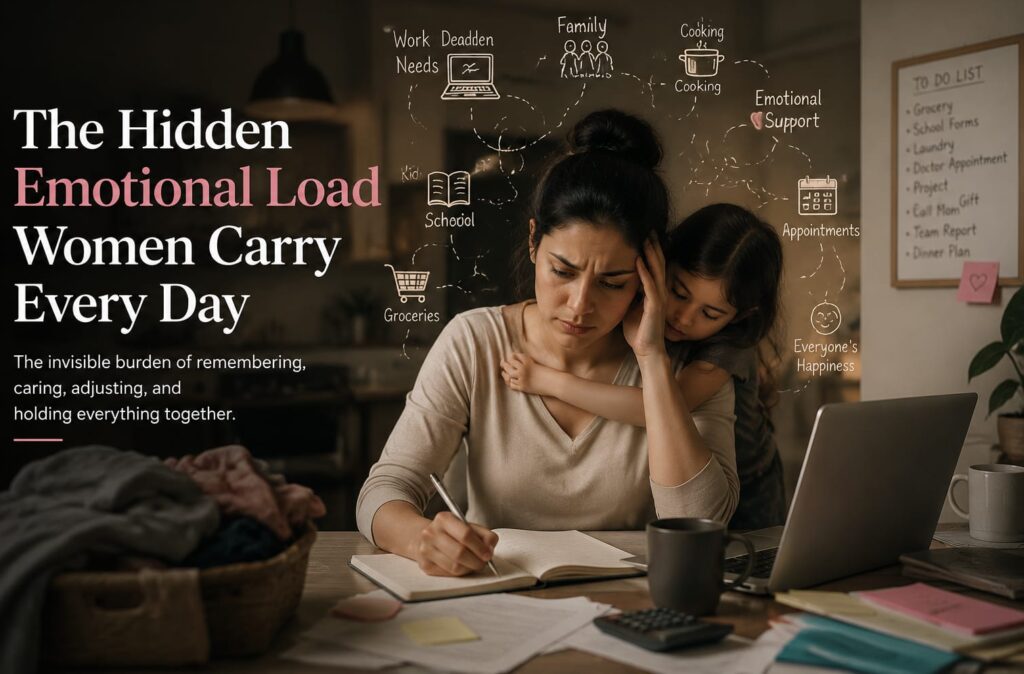
The invisible burden of remembering, caring, adjusting, and holding everything together. “She may forget to drink her tea while it is still hot, but she will remember everyone else’s needs before they even speak them out loud.”
There are many kinds of work in everyday life. Some of them are visible – cooking, cleaning, going to work, earning money, attending meetings, taking care of children, paying bills. These are tasks people can see, count, and appreciate. But there is another kind of work that often goes unnoticed. It has no fixed timing, no salary, no holiday and no proper recognition. It happens silently in the mind and heart. This is the hidden emotional load women carry every day.
It is the constant pressure of remembering what needs to be done, noticing what others need, planning ahead, managing emotions, solving problems before they grow, and making sure life around them runs smoothly. It is the mental work of carrying not just one’s own responsibilities, but often the needs, moods, schedules, and comfort of everyone else too and because this work is invisible, it is often ignored.
The burden that doesn’t look like work
When we think of “work,” we usually imagine the physical efforts or professional responsibility. But emotional load is different. It is not always about what a woman does with her hands. It is often about what she carries in her mind all the time.
- It is remembering that the electricity bill has to be paid.
- It is reminding an elderly parent about medicine and It is checking whether groceries are enough for tomorrow.
- It is noticing that someone in the family has been unusually quiet.
- This is thinking about birthdays, appointments, travel plans, school forms, emotional tensions, and unfinished tasks — all at once.
For many women, the emotional load is built through tiny, everyday acts that seem too ordinary to mention. But together, these small acts create a huge mental burden.
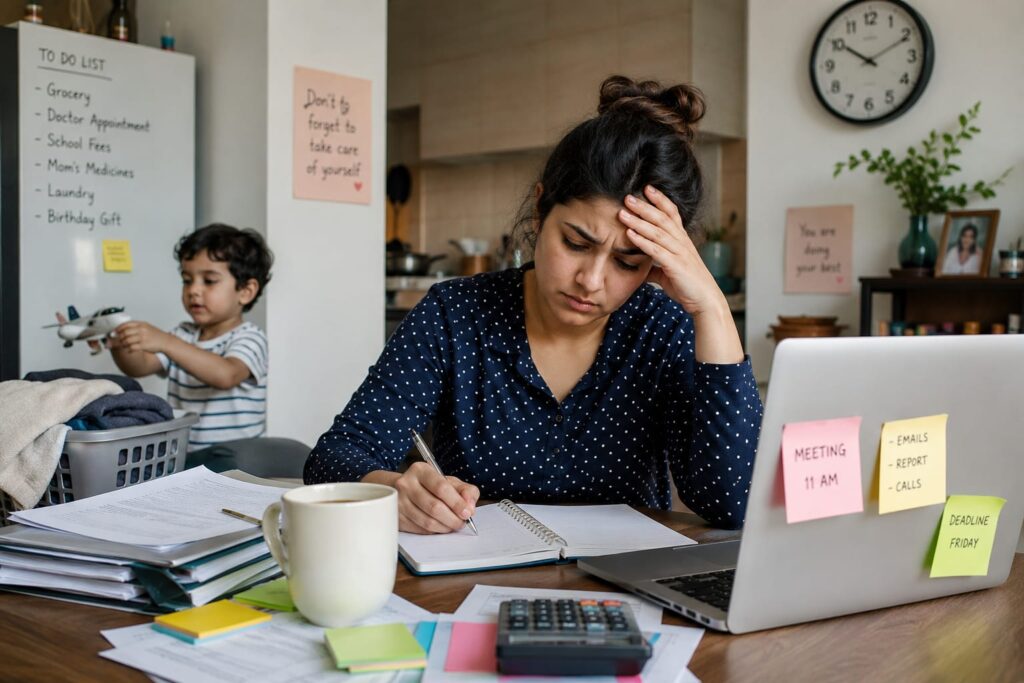
The home may be shared, but the mental load often is not
In many households today, responsibilities may appear more balanced than before. Men may help with shopping, dropping children to school, or paying bills. But even in homes where tasks are shared, the mental responsibility of managing everything often still falls on women.
There is a difference between helping and carrying responsibility.
For example, someone may help if asked to buy groceries. But who remembered that groceries were running out?Someone may attend a parent meeting. But who kept track of the date, packed the file, and made sure the child was ready?Someone may take a family member to the doctor. But who booked the appointment, remembered the reports, and followed up on the medicines?
This is where the emotional load becomes clear. The visible task may be shared, but the invisible planning behind it often remains with women. As a result, many women are not only doing their share of work — they are also acting as the manager, reminder system, emotional support, and silent planner of the entire household.
Women are often expected to hold the emotional atmosphere together
The emotional load is not only about schedules and responsibilities. It is also about feelings – everyone else’s feelings. In many families and relationships, women are expected to be the ones who maintain peace, understand emotions, and handle emotional tension with patience. They are expected to notice when someone is upset, comfort people when they are stressed, and prevent conflicts from growing.
If there is a misunderstanding in the family, women are often expected to solve it gently.If a child is anxious, they are expected to calm them.If parents are worried, they are expected to reassure them.If a partner is stressed, they are expected to listen, support, and adjust. Over time, this creates a silent expectation that women should always be emotionally available – no matter how tired they themselves are.
But who comforts the woman who has been comforting everyone else?Who notices when she is overwhelmed?Who asks whether she is okay, not because something went wrong, but simply because she has been carrying too much for too long?
These questions matter because emotional support cannot keep flowing from one person endlessly without affecting her own well-being.
Why women themselves sometimes struggle to explain this burden
One of the hardest parts about emotional load is that it can be difficult to describe. It is not a single event. It is not one clear task. It is a thousand tiny responsibilities that sit quietly in the mind every day. This is why many women do not always say, “I am carrying emotional load.” Instead, it may come out in other ways:
- “I’m just tired all the time.”
- “I don’t know why I feel irritated.”
- “I feel like I have too much in my head.”
- “No one understands how much I’m thinking about.”
- “Even when I sit down, my mind doesn’t rest.”
Because emotional labour is invisible, women may even start questioning themselves. They may wonder whether they are overreacting or simply “bad at managing stress.” In reality, what they are feeling may be the result of carrying the mental and emotional needs of too many people, too often, for too long.
This is not “just a women’s issue” – it is a social issue
The hidden emotional load women carry is not a private matter limited to individual homes. It reflects the way society has shaped gender roles for generations.From childhood, girls are often taught to be caring, responsible, calm, and accommodating. They are encouraged to think about others, help at home, maintain relationships, and behave with patience. These are valuable qualities, but when they are expected only from girls and women, they become unequal responsibilities rather than shared human values.
As adults, women often grow into roles where caring for others becomes so normal that even they may stop questioning how much they are carrying. Meanwhile, men may not always be raised to notice or take equal responsibility for emotional and mental labour. This is why the conversation around equality cannot stop at education, jobs, or income alone. Equality also means sharing the invisible work of remembering, planning, care giving, and emotional support. Because a woman who is professionally successful but still expected to carry the emotional burden of the whole family is not truly free from unequal expectations.

Women do not need to be superheroes to deserve respect
One of the most harmful expectations placed on women is the idea that they must prove their worth by managing everything perfectly. The perfect daughter. The perfect wife. The perfect mother. The perfect employee. The perfect caregiver. But women are not machines designed to absorb endless responsibility. They are human beings with their own limits, emotions, ambitions, and need for rest.
They should not have to earn appreciation only through sacrifice.They should not have to break down before others realise they needed help.They should not have to choose between caring for everyone else and caring for themselves.
A quieter, fairer future starts with noticing what has always been invisible
Sometimes social change begins not with a big law or a dramatic event, but with a simple shift in awareness. It begins when we start noticing what we previously ignored. The hidden emotional load women carry every day has existed for a long time. It has been normalized, romanticised, and dismissed as part of womanhood. But just because something is common does not mean it is fair. If women are expected to remember, soothe, organize, adjust, and emotionally support everyone around them, then that labour deserves to be seen. It deserves to be shared and it deserves to be spoken about openly. Because a society that values women must also value the invisible work they do.
The hidden emotional load women carry every day is not made of one big responsibility. It is made of countless small acts of care, memory, patience, planning, and emotional strength. It lives in the reminders they never forget, the peace they try to maintain, the needs they notice before anyone else does, and the exhaustion they often hide behind a calm face.
To understand women more honestly, we must look beyond what they do with their hands and see what they carry in their minds and hearts. Only then can we move toward a more equal, compassionate, and human society — one where care is shared, rest is respected, and women are no longer expected to carry the invisible weight of everyone else’s world.